Can I live in Ireland without a car?
In Dublin, and in the centres of Cork and Galway, you can manage without a car using buses, the Luas, the DART and bikes. Elsewhere, especially in the countryside, most people drive. A TFI Leap card makes public transport cheaper everywhere.
In 30 seconds
- In Dublin, a €2 TFI 90-minute fare covers bus, Luas, DART and commuter rail in Zone 1, with adult caps of €6 a day and €24 a week
- City buses in Cork, Galway, Limerick and Waterford cost €1.35 a journey with a Leap card
- Residents aged 66 and over can get Free Travel on most public transport
Can you manage without a car?
- Dublin: yes, if you live near a Luas, DART or frequent bus route
- Cork and Galway city centres: mostly, with buses, walking and cycling, though services thin out in the suburbs
- Limerick, Waterford and Kilkenny: possible in town; a car makes life easier for anything beyond
- Rural Ireland: hard. TFI Local Link runs rural buses, but services can be infrequent
Check the commute from any home you consider on the Transport for Ireland journey planner before you sign a lease.
Fares by place
| Place | Adult fare with TFI Leap | Caps and passes |
|---|---|---|
| Dublin (Zone 1) | €2 for 90 minutes on bus, Luas, DART and commuter rail | €6 a day, €24 a week |
| Cork, Galway, Limerick, Waterford city buses | €1.35 a journey | Weekly and monthly tickets on some services |
| Young adults (19 to 25) and students | About half the adult fare | With a Young Adult or Student Leap card |
| Children (5 to 18) | €0.65 in Dublin | Lower caps |
Get a TFI Leap card at newsagents or online, or tap a contactless bank card on most Dublin services. Many employers offer an annual Taxsaver ticket bought from your gross pay, which saves income tax, USC and PRSI.
Dublin
- Luas: two tram lines, Red and Green, crossing in the city centre
- DART: the coastal railway from Malahide and Howth to Greystones
- Dublin Bus and Go-Ahead Ireland: most routes, including the new BusConnects network
- Commuter rail to Kildare, Meath, Louth and Wicklow; fares rise by zone
Trains and coaches between cities
Irish Rail runs intercity trains from Dublin to Cork (about 2 hours 30 minutes), Galway, Limerick, Waterford, Kilkenny, Sligo and Belfast (with Translink, about 2 hours 10 minutes). Booking online in advance is cheaper. Coaches from Bus Éireann (Expressway) and private firms such as Aircoach, Citylink and Dublin Coach link towns and airports, often cheaper than the train.
Free Travel at 66
Everyone living in Ireland aged 66 or over is entitled to Free Travel on most public transport, including buses, trains, the Luas and DART, and many private services. Apply through the Department of Social Protection; you get a Public Services Card marked for Free Travel. Some people under 66 qualify through disability or carer payments.
Bikes and e-scooters
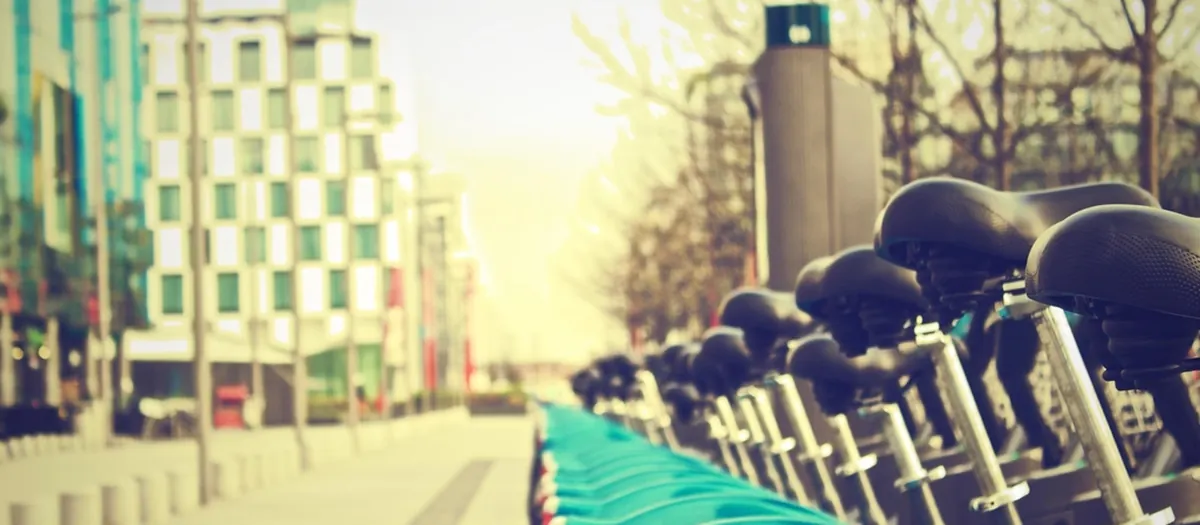
- Cities are building more cycle lanes; Dublin, Cork, Galway and Limerick have bike-share schemes
- The Cycle to Work scheme lets employees buy a bike or e-bike tax-free, up to €1,250 (€1,500 for an e-bike)
- Cycling offences such as running red lights carry fixed charges
- E-scooters are legal on roads at up to 20 km/h, not on footpaths and without passengers. Since 4 September 2026 riders must wear a helmet and high-visibility clothing, and since 2 October 2026 the minimum age is 18 (it was 16). Gardaí can seize scooters, with fees of €80 plus €30 a day in storage; €100 fixed charges for e-scooter offences are being brought in
- E-scooters and e-bikes with fixed batteries aren’t allowed on public transport
Taxis and ride-hailing
Taxis are regulated by the National Transport Authority, with meters and set maximum fares. Apps such as FreeNow, Uber and Bolt book licensed taxis; private ride-sharing as in the UK isn’t allowed. Taxis can be scarce late at night at weekends.
Worked example: an e-bike through Cycle to Work
Your employer buys the bike and you repay it from your gross salary, so you save income tax, USC and PRSI on the cost. On a €1,500 e-bike, a higher-rate taxpayer saves about 47% to 52% (40% income tax, 3% or 8% USC and 4.35% PRSI): roughly €710 to €785, so the bike costs about €715 to €790. On the standard rate the saving is about a quarter. The limits are €1,500 for e-bikes and €1,250 for other bikes, once every four tax years: buy in 2026 and your next turn is January 2030. Children under 5 travel free on all TFI buses, trains and trams.
What to do next
- Get a TFI Leap card on your first day
- Check the commute from any home on the TFI journey planner
- Ask your employer about a Taxsaver ticket or Cycle to Work
Keep going
- Transport for Ireland: TFI Leap Card
- Transport for Ireland: Luas and Dublin fares, TFI Leap caps
- Transport for Ireland: Bus fares (city services in Cork, Galway, Limerick, Waterford)
- Transport for Ireland: Train fares
- Transport for Ireland: About Iarnród Éireann Irish Rail
- Citizens Information: Free Travel
- Road Safety Authority: E-scooters
- Department of Transport: Ministers introduce regulations raising minimum age for e-scooter use to 18 (22 Sep 2026)
- Department of Transport: Helmets and high-visibility clothing mandatory for e-scooter users (2 Sep 2026)
- The Irish Times: E-scooters will be legal to use on Irish public roads from next week (May 2024)
- Irish Examiner: E-scooter rules, what could change in Ireland (2026)
- Citizens Information: Cycle to Work scheme
- Citizens Information: Cycling offences
- TFI Local Link: Rural transport
- National Transport Authority: Taxi fares and regulation
- Revenue: Travel pass scheme