Food shopping and eating out
Food is central to French life: markets, bakeries and long lunches are part of the week. Supermarkets are big and good value, prices in restaurants include service, and you can always ask for a free jug of tap water.
In 30 seconds
- Hypermarkets (Leclerc, Carrefour, Auchan, Intermarché) are cheapest for a big shop; discounters (Lidl, Aldi) and markets help too
- Most food has 5.5% VAT; restaurant meals 10%; alcohol 20%
- Service is included in restaurant prices, so tipping is optional; restaurants must serve tap water free with a meal
The main shops
| Shop | What it’s like | Closest UK feel |
|---|---|---|
| E.Leclerc, Carrefour, Auchan, Intermarché | Huge out-of-town hypermarkets with everything; often the cheapest | Big Tesco or Asda |
| Lidl and Aldi | Discounters, more French produce than in the UK | Lidl and Aldi |
| Monoprix, Franprix, Carrefour City | City-centre stores, longer hours, higher prices | M&S Food or Tesco Express |
| Picard | Frozen food specialist, good ready meals | Cook |
| Grand Frais and markets | Fresh fruit, vegetables, cheese and fish | Farm shops and markets |
| Biocoop, Naturalia | Organic chains | Whole Foods-style |
Many shops close on Sunday afternoons, and in smaller towns at lunchtime. Bakers open early and take turns closing one day a week.
VAT on food
| Rate | What it covers |
|---|---|
| 5.5% | Most food and non-alcoholic drinks bought in shops |
| 10% | Restaurant meals, takeaways and food to eat straight away |
| 20% | Alcohol, sweets and some processed products |
Markets and bakeries
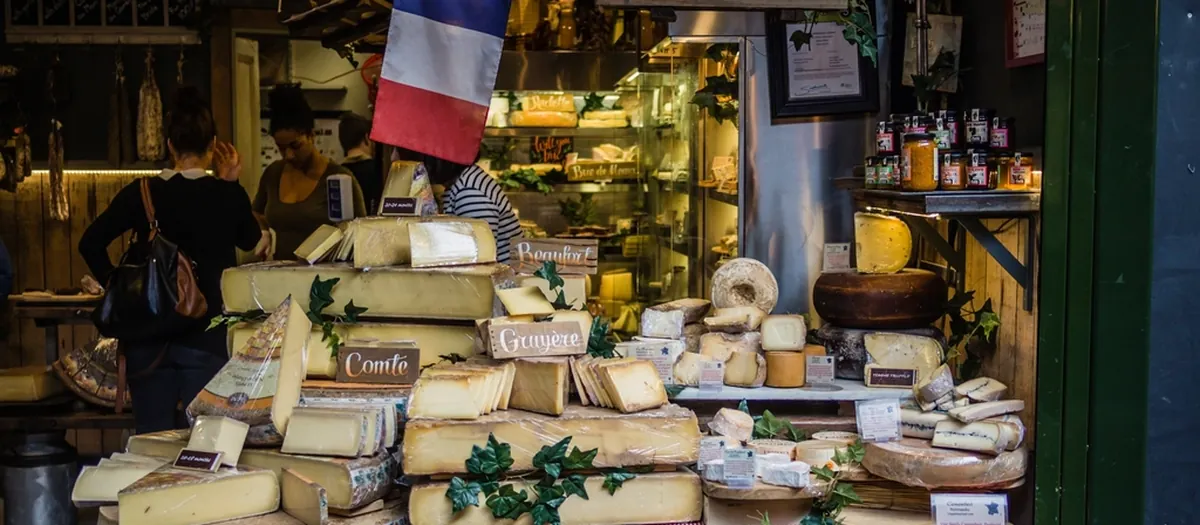
Most towns hold a market one or more mornings a week, with local producers. Boulangeries sell bread fresh several times a day; a baguette costs about €1 to €1.40. Prices are often quoted per kilo, and you’ll be served at the counter rather than help yourself in many markets.
Meal times and the set menu
Lunch is usually 12:00 to 14:00 and kitchens can close by 14:00. Dinner starts from about 19:30. At lunch, a formule or menu du jour (starter and main, or main and dessert) is the best value, often €15 to €20 in cities and less in the provinces. Book ahead on Friday and Saturday evenings.
Your rights when eating out
- Prices on the menu include service and taxes, and menus must be displayed outside
- A jug of tap water (carafe d’eau) and bread come free with a meal
- “Fait maison” on the menu means the dish was made on site from raw ingredients
- You can ask for a container to take leftovers home
- Payment by card is standard, but some small places have a minimum
Tipping
Service is included by law, so tipping is a thank-you, not an obligation. Leaving a few euros, or rounding up, for good service is common. Taxi drivers and hairdressers don’t expect much more than rounding up.
Alcohol
- You must be 18 to buy alcohol, and shops can ask for ID
- Drinking in the street may be banned in some town centres by local order
- Drink-driving limits are low: 0.5 g per litre of blood, 0.2 for new drivers
Tap water
Tap water is safe to drink everywhere in mainland France and checked by the regional health agencies. In some areas it’s hard and chalky, which is why many people use filters or buy bottled water.
Seasons and specialities
French shopping follows the seasons: strawberries and asparagus in spring, stone fruit in summer, mushrooms, game and chestnuts in autumn, oysters and galette des rois in winter. Each region has its own cheeses, wines and dishes, and markets are the best place to try them. Many towns hold a big market or fair for local produce once a year.
Saving money
- Own-brand products (marques distributeur) are good value in every chain
- Loyalty cards give money back as vouchers or credit, especially at Leclerc, Carrefour and Intermarché
- Anti-waste apps sell unsold food from bakeries and shops cheaply at the end of the day
- Click-and-collect (drive) is popular and avoids impulse buys
- Fuel at hypermarkets is usually cheaper than on motorways
Heat and food safety
In summer heat waves, keep shopping cool on the way home and check Météo-France warnings before outdoor markets and picnics. Wild mushrooms you pick yourself can be checked free by many pharmacists.
What to do next
- Find your local market day
- Get a loyalty card at the supermarket you use most
- Try the lunch menu at a local restaurant
Keep going
- Météo-France: weather warnings map (vigilance)
- Ministère de l’Économie: VAT rates in France
- Service-Public: Leaving without paying, and your rights in restaurants
- Entreprendre Service Public: The “fait maison” label in restaurants
- DGCCRF (consumer protection): prices, service included and tap water in restaurants
- Service-Public: Drunkenness and alcohol rules
- Sécurité routière: Alcohol and driving
- Service-Public: Paying in cash