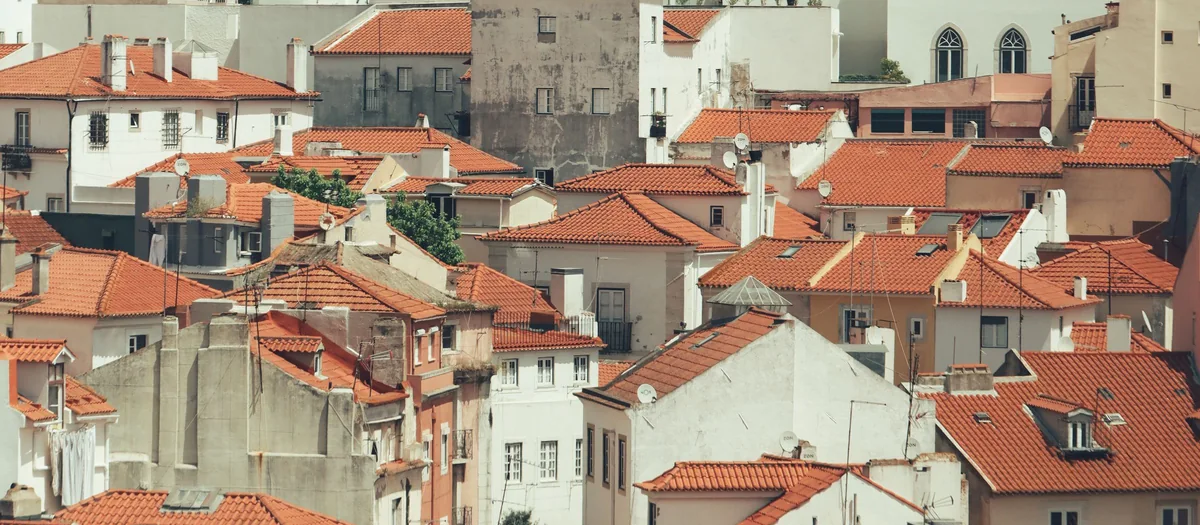
Can we buy a home in Portugal?
Yes. Portugal has no ban on foreigners buying homes, and you don’t need residence to buy. What you pay in purchase tax depends on the price and on whether the home will be your own permanent home, and the steps differ from the UK.
In 30 seconds
- You need a tax number (NIF) to buy. Purchase tax (IMT) for 2026 runs in bands up to 8%, then a flat 6% or 7.5% on dearer homes; there is no IMT on an own permanent home up to €106,346. Stamp duty adds 0.8%
- On a €300,000 home you pay about €12,942 (about £10,970) in IMT and stamp duty if it will be your permanent home, or about €14,005 (about £11,870) as a second home
- Banks follow Banco de Portugal limits: up to 90% of the price or valuation for an own permanent home and 80% otherwise. Non-residents are often offered 70% to 80%, sometimes less
Who can buy
British citizens can buy in Portugal whether or not they live there. You need a tax number (número de identificação fiscal, NIF), and in practice a Portuguese bank account to pay taxes and bills. Getting the NIF is free. If you don’t live in Portugal, gov.pt says you need a fiscal representative (representante fiscal) with an address in Portugal. The tax office’s English guidance is more precise: within 15 days of acquiring a property (or a car, a job or self-employment) in Portugal, a non-resident must appoint a representative or sign up for its electronic notifications, and non-EU citizens who are self-employed in Portugal need a representative registered for VAT. Most buyers from the UK ask their lawyer to apply for the NIF and act as representative. Buying a home no longer gives you residence: the golden visa property routes ended in October 2023 (see Which Portuguese visa do I need? and How much tax will I pay in Portugal?).
How buying works
- Get your NIF and a Portuguese bank account
- Hire an independent lawyer or solicitor. Lists of lawyers are on the Ordem dos Advogados website. Ask them to check the property before you pay anything
- Check the paperwork. The property registry certificate (certidão do registo predial) shows who owns the home and any mortgages or charges. The tax record (caderneta predial) shows the tax value. Also ask for the licence to occupy (licença de utilização), the energy certificate (certificado energético), the technical sheet (ficha técnica de habitação) for newer homes and, for a flat, the condominium’s declaration of debts
- Sign a promissory contract (contrato-promessa de compra e venda, CPCV) and pay a deposit (sinal). It isn’t compulsory, but it is common. For a building, the Civil Code requires the signatures to be recognised in person (reconhecimento presencial). The deposit is agreed between you; the law sets what happens if someone pulls out: if the buyer backs out they lose the deposit, and if the seller backs out they must pay back double. Either side can instead ask a court to force the sale
- Pay IMT and stamp duty before completion. Proof of payment is needed on the day
- Sign the deed. It can be a public deed (escritura) before a notary, or an authenticated private document (documento particular autenticado) prepared by a lawyer or solicitor; both have the same legal effect. Casa Pronta offices at the registry can do the deed and registration in one go
- Register the purchase at the land registry (conservatória do registo predial), if your lawyer or Casa Pronta hasn’t already done so
Purchase tax: IMT and stamp duty
Municipal property transfer tax (imposto municipal sobre as transmissões onerosas de imóveis, IMT) is worked out on the price or the property’s tax value (valor patrimonial tributário), whichever is higher. The 2026 bands were set by the 2026 budget law (Law 73-A/2025). The rates below are for mainland Portugal; Madeira and the Azores have their own tables, so check the Portal das Finanças for Funchal.
| Value (2026, mainland) | Own permanent home | Second home or holiday let |
|---|---|---|
| Up to €106,346 | 0% | 1% |
| €106,346 to €145,470 | 2% | 2% |
| €145,470 to €198,347 | 5% | 5% |
| €198,347 to €330,539 | 7% | 7% |
| €330,539 to €660,982 (second homes: to €633,931) | 8% | 8% |
| Above that, up to €1,150,853 | 6% on the whole value | 6% on the whole value |
| Over €1,150,853 | 7.5% on the whole value | 7.5% on the whole value |
The percentages are marginal rates, so each slice is taxed at its own rate until the flat-rate bands. Stamp duty (imposto do selo) of 0.8% is added on the same value, and a mortgage carries a further 0.6% of the loan when it runs for 5 years or more. Rural land pays 5% IMT. Buyers with a tax address in a territory on Portugal’s list of tax havens pay a flat 10% IMT. If you claim the own-home rates but don’t move in within 6 months, you lose the relief and pay the difference.
| Price | Own permanent home: IMT + stamp duty | Second home: IMT + stamp duty |
|---|---|---|
| €200,000 | €5,142 (about £4,360) | €6,205 (about £5,260) |
| €300,000 | €12,942 (about £10,970) | €14,005 (about £11,870) |
| €400,000 | €21,437 (about £18,170) | €22,500 (about £19,070) |
The under-35 exemption
Since 1 August 2024, buyers aged 35 or under at the date of the deed pay no IMT and no stamp duty on their first own permanent home up to €330,539 in 2026, with partial relief up to €660,982. You must not have owned a home in the 3 years before, and must not be someone else’s dependant for IRS in that year. DECO and ECO both say the relief applies whatever your nationality. The home must become your own permanent home, so in practice it suits people who are moving to Portugal, not people buying from the UK. Couples are assessed half each, so a couple where only one partner qualifies gets half the relief.
Mortgages
- Banco de Portugal’s recommendation limits loans to 90% of the price or valuation, whichever is lower, for an own permanent home, and 80% for other homes
- From 1 August 2026, total loan repayments should not take more than 45% of income (down from 50%), tested against a rise in interest rates. Banks can go above this for up to 10% of their lending each half year
- Maximum terms are 40 years if you are 35 or under, and 35 years if you are older. If you will be over 70 at the end, the bank should assume your income falls by at least 20% after that age
- These are recommendations, not law, but banks follow them and the central bank wants to make them binding
- Non-residents usually get less: ComparaJá says banks often lend up to 80%, reduced to 70% to 75% for people living outside the EEA, over shorter terms and at slightly higher rates
- Banks usually ask for life and buildings insurance. See How do I open a Portuguese bank account? and How do I build a credit history in Portugal?
Costs once you own it
| Cost | What it is |
|---|---|
| IMI (municipal property tax) | Yearly tax on the tax value of the home, charged to whoever owns it on 31 December. Councils set the rate between 0.3% and 0.45% for urban property. It is paid in May if €100 or less, in May and November up to €500, or in May, August and November above that. Empty or ruined homes can pay three times the rate |
| AIMI (additional IMI) | A yearly charge on the property in Portugal you own when its total tax value is over €600,000 per person: 0.7%, rising to 1% over €1 million and 1.5% over €2 million. Married couples and civil partners can choose to be taxed jointly, which doubles these limits |
| Condominium fees (quotas de condomínio) | For flats: upkeep, cleaning, lifts and insurance of the common parts. Each building must keep a reserve fund. Since 2022 the seller must get a declaration of the flat’s debts from the building administrator, and as a rule the new owner is only liable for debts arising after the purchase |
| Insurance | Fire insurance is compulsory for flats in a building; a mortgage lender will also ask for its own cover |
| Letting income | Rent from a long let of a home is taxed at a special 25% rate, or added to your other income if you choose |
| Our six places | IMI rate 2026 (urban) |
|---|---|
| Lisbon | 0.30% |
| Porto | 0.32% |
| Faro (Algarve) | 0.30% |
| Funchal (Madeira) | 0.30% |
| Coimbra | 0.30% |
| Braga | 0.32% |
On a home with a tax value of €150,000 in Lisbon, IMI would be €450 a year (about £380). The tax value is often well below the price you pay: it is on the caderneta predial. Some lower-value own homes get a temporary IMI exemption: ask the tax office or your lawyer. Other councils, such as Cascais at 0.35%, charge more. Check your council’s IMI rate on the Portal das Finanças
Letting it to tourists
Short-term letting (alojamento local, AL) needs a registration with the council. Since 1 November 2024 (Decree-Law 76/2024) there is no national freeze on new registrations, but councils can set their own rules, including containment areas where new registrations are limited or banned, and can suspend new registrations while they write those rules. A temporary decree (Decree-Law 151/2026) gives councils until 31 December 2026 to approve them. Lisbon’s regulation, in force since 6 December 2025, bans new registrations where short lets reach 10% of permanent homes and needs express approval between 5% and 10%. Other councils, including Porto and Funchal, have their own rules. Never buy assuming you can let to tourists: ask your lawyer to check the council’s rules and the building’s condominium rules first. For long lets, see How do deposits and rental contracts work?
What to do next
- Get your NIF, with a fiscal representative or electronic notifications while you live in the UK, and open a Portuguese bank account
- Book an independent lawyer or solicitor before you sign a CPCV or pay a deposit
- Use the cost calculator to budget IMT, stamp duty, Casa Pronta fees and yearly IMI
Keep going
- gov.pt: Buying and selling property in Portugal (documents, taxes, deed, Casa Pronta)
- gov.pt: How to get a NIF and NISS as a foreign citizen (fiscal representative for non-residents)
- Portal das Finanças: Appoint a tax representative (non-residents, in English)
- Portal das Finanças: IMT Code, article 17 (2026 rates, Law 73-A/2025)
- Portal das Finanças: IMT Code, article 9 (own-home and under-35 exemptions)
- Portal das Finanças: IMT Code, article 11 (losing the exemption: six months to move in)
- Portal das Finanças: IMT Code, article 12 (price or tax value, whichever is higher)
- DECO PROteste: IMT and stamp duty exemption for buyers up to 35 (2026 limits)
- ECO: Young people can now buy a home without paying IMT (applies regardless of nationality)
- Portal das Finanças: Stamp Duty general table (items 1.1, 1.2 and 17)
- Procuradoria-Geral Regional de Lisboa: Civil Code, consolidated text (promissory contracts, deposits, forced heirship, wills)
- DECO PROteste: Deed or authenticated private document: where and how to sign a property purchase
- Justiça.gov.pt: Balcão Casa Pronta (what it does and costs)
- ECO: Banco de Portugal tightens credit rules from August (2 Jul 2026)
- Santander Portugal: New mortgage rules from the Banco de Portugal recommendation (2026)
- ComparaJá: Mortgages for foreigners in Portugal: rules and restrictions
- Portal das Finanças: IMI Code, article 112 (rates 0.3% to 0.45%)
- Portal das Finanças: IMI Code, article 8 (owner on 31 December pays)
- Portal das Finanças: IMI Code, article 120 (payment instalments)
- Economia e Finanças: IMI rates by municipality payable in 2026
- Portal das Finanças: IMI Code, article 135-C (AIMI: €600,000 deduction)
- Portal das Finanças: IMI Code, article 135-F (AIMI rates)
- Santander Portugal: The condominium law (2022 changes: debt declaration, reserve fund)
- PLMJ: Municipal regulation of short-term letting (Decree-Law 151/2026, Aug 2026)
- GuestReady: Short-term letting containment areas in Lisbon: what changed in 2026
- Portal das Finanças: IRS Code, article 72 (special rates: 25% residential rent, 28% capital income)